go West
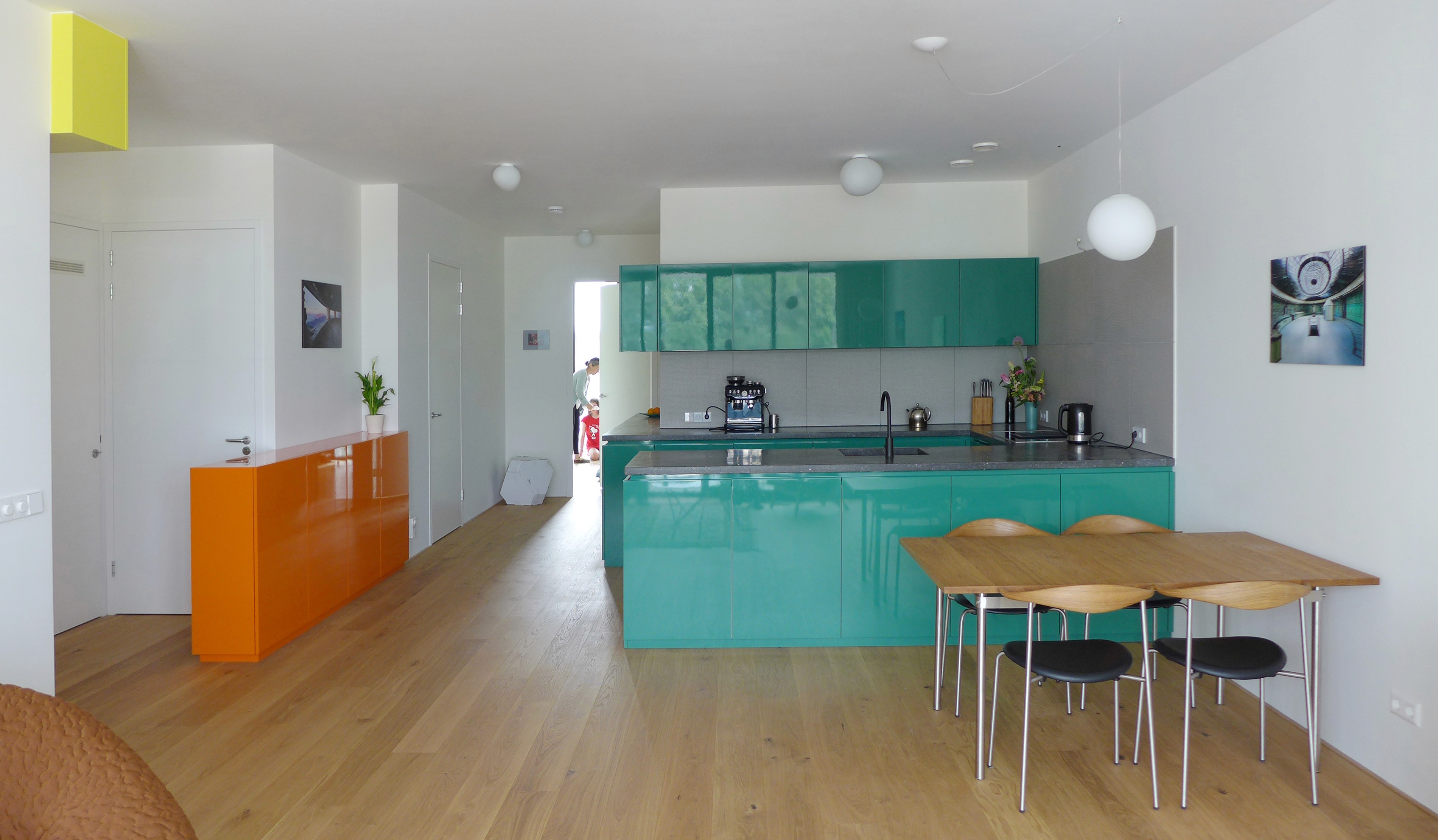
Go West is a distinctive, energy-neutral residential building in New West, Amsterdam, where collaboration lies at the heart of the design. Residents worked closely with our studio to shape the final project, ensuring that each detail contributes to a vibrant, welcoming community. This collaborative approach resulted in generous outdoor areas, including a spacious roof terrace for greenery and socializing, as well as custom interiors tailored to residents’ diverse needs.
Go West is a distinctive, energy-neutral residential building in New West, Amsterdam, where collaboration lies at the heart of the design. Residents worked closely with our studio to shape the final project, ensuring that each detail contributes to a vibrant, welcoming community. This collaborative approach resulted in generous outdoor areas, including a spacious roof terrace for greenery and socializing, as well as custom interiors tailored to residents’ diverse needs.
Client
Bouwgroep Go West
Bouwgroep Go West
Residential development
17 apartments Collective Private Commissioning
17 apartments Collective Private Commissioning
Developed in collaboration with
Maikel Gielens
Design team
Sophie Valla, Gertjan Laan, Guido Schot, Sara Ramadane
Pictures
TBC
Marcus Koppen
Location
Amsterdam Nieuw-West, The Netherlands
Status
Delivered - January 2019
Postwar Context
Postwar Context
Postwar Context
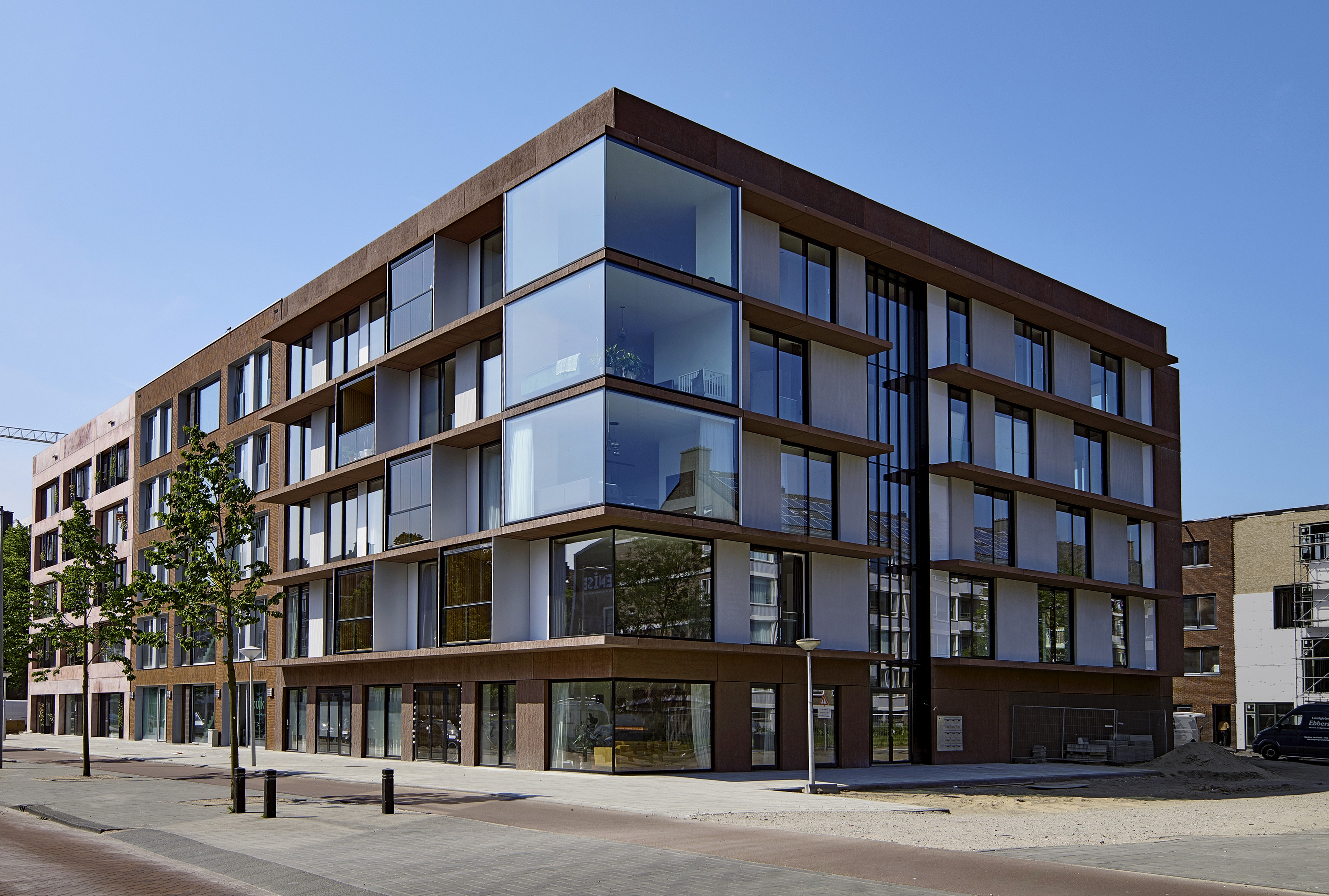
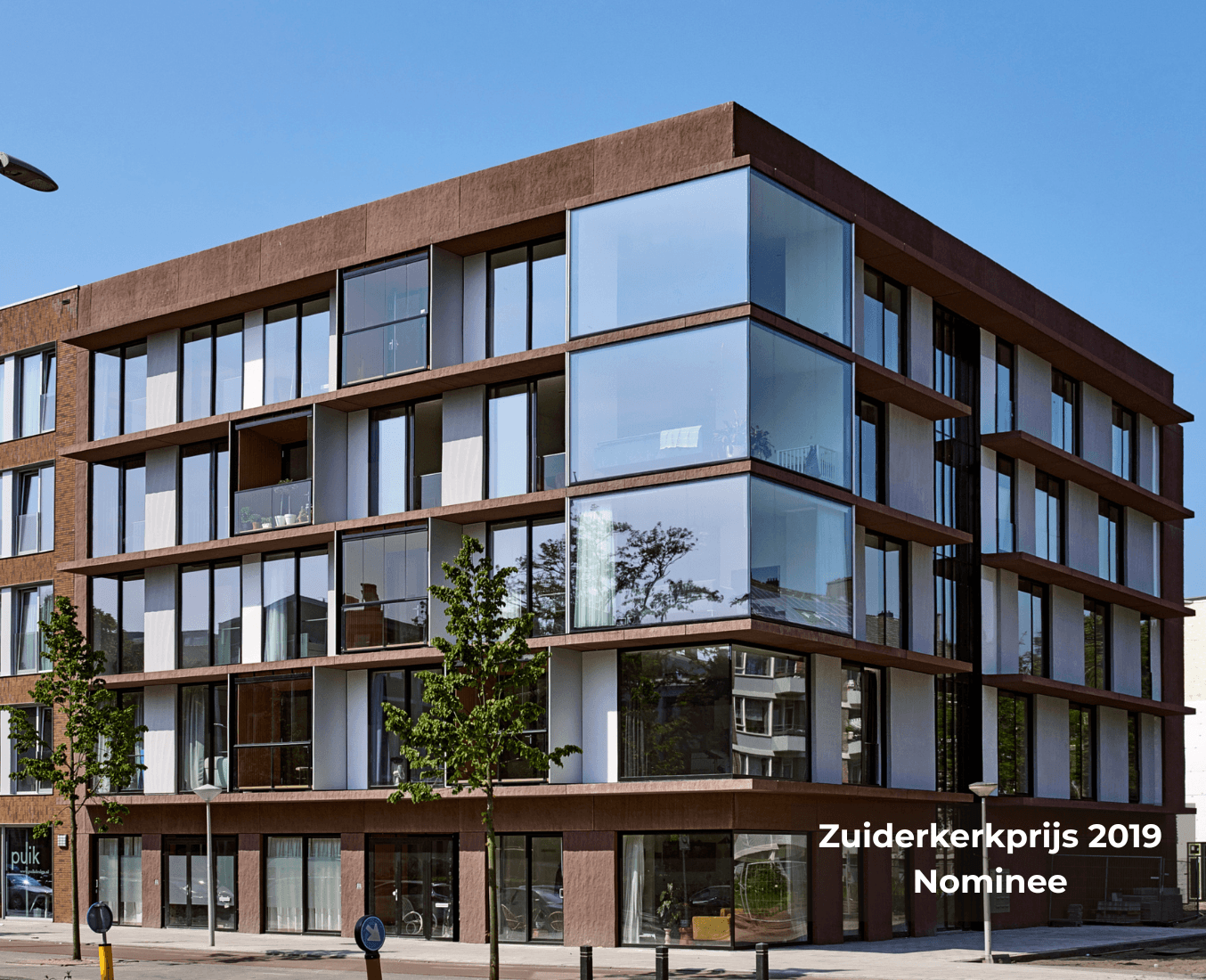
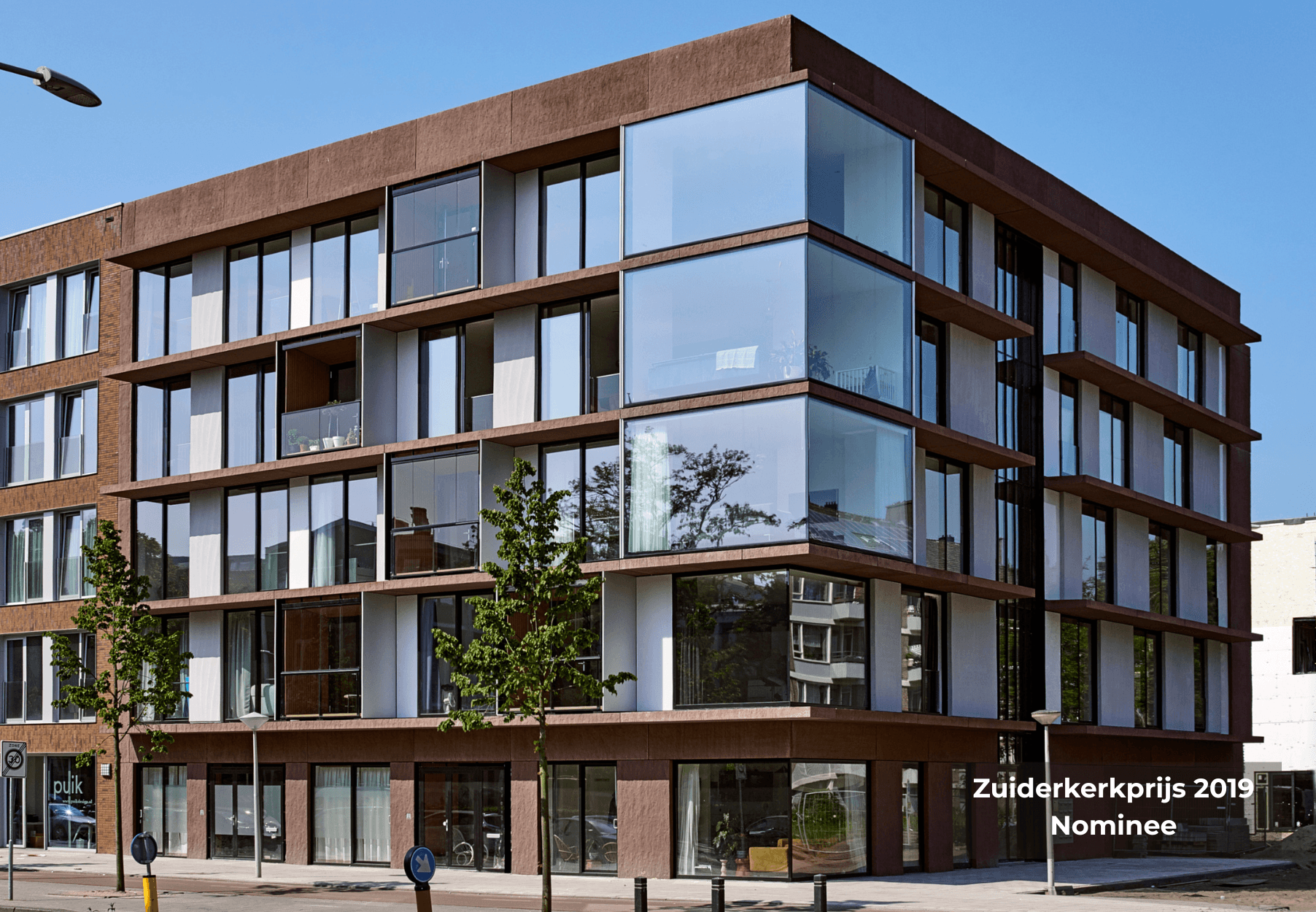
The design responds to its postwar surroundings. The brief requested a stone-like façade, though brick is more typical in Amsterdam’s city center. Situated in the Van Eesteren Plan—a postwar neighborhood of fast, prefabricated housing—the building references this historical context through contemporary means.
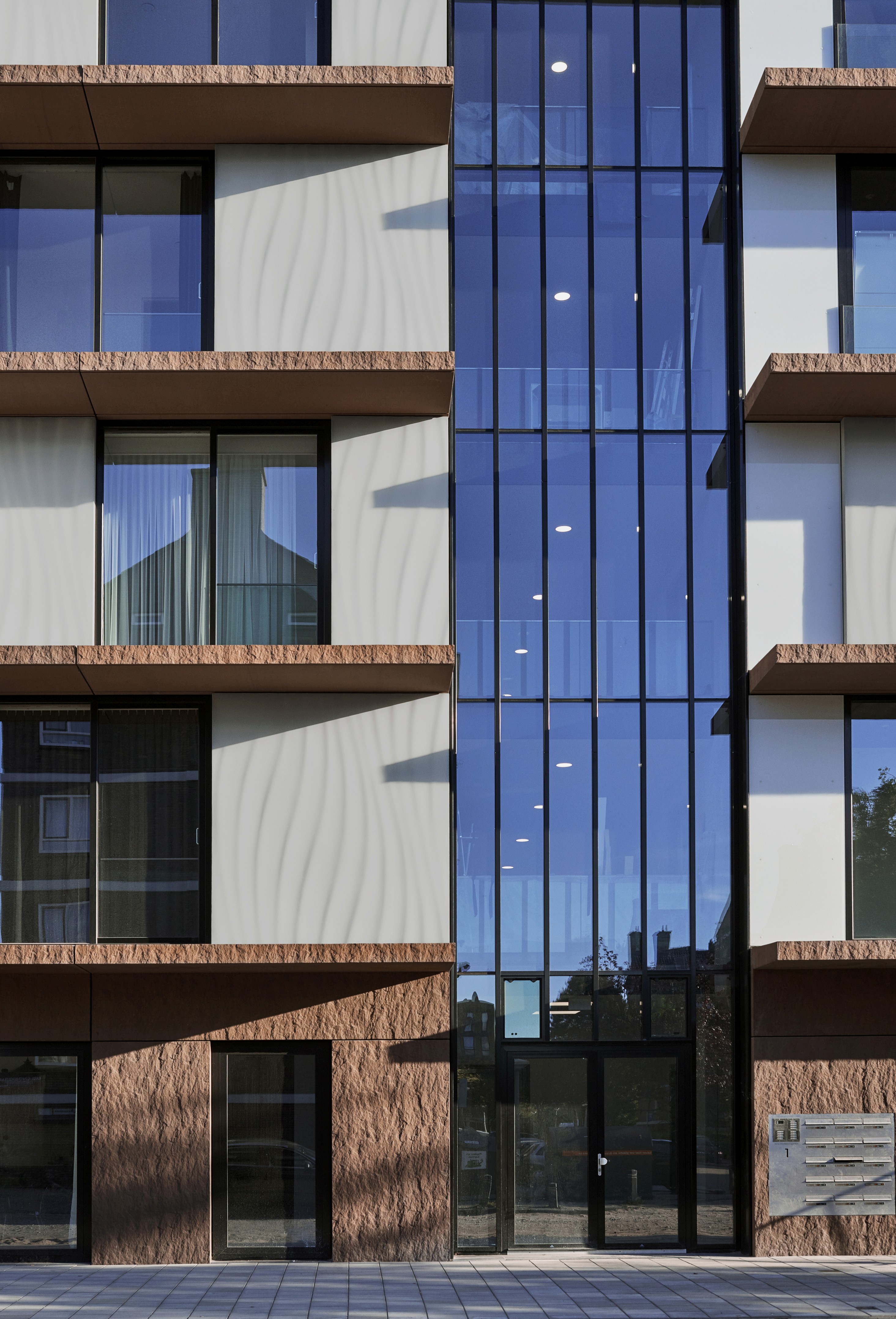
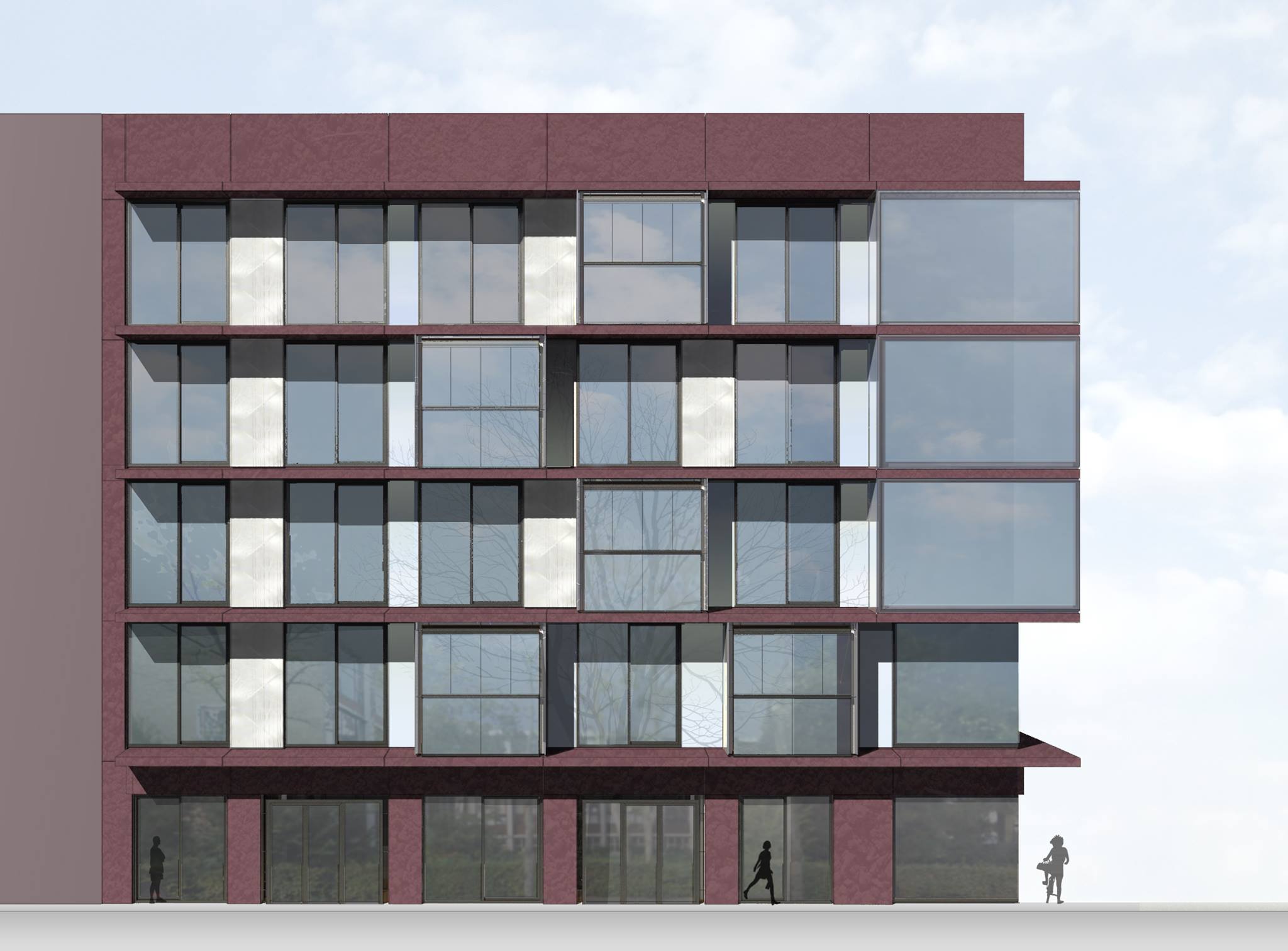
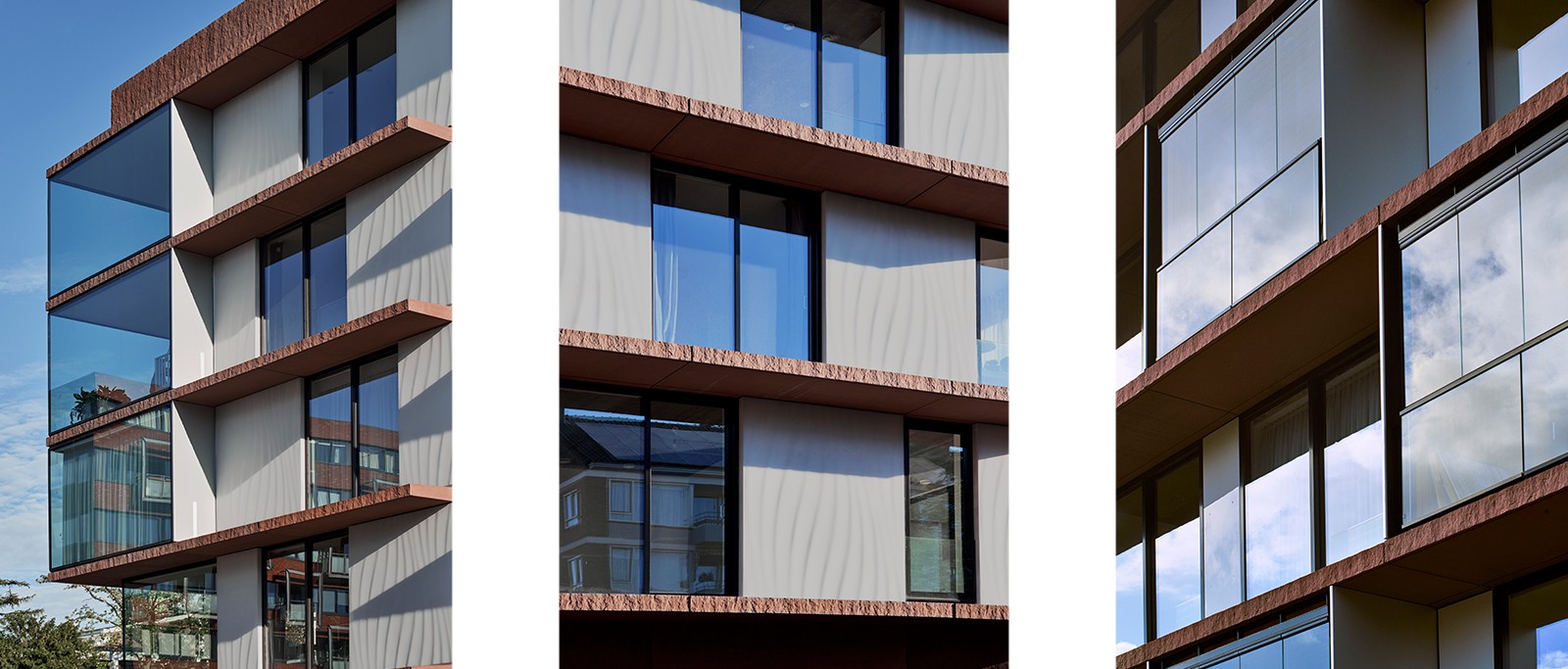
Bordeaux-colored, textured concrete panels emulate a stone-like appearance, enhanced with black and red sand to give an iron-like tone. Strong horizontal bands reference modernist architecture, creating a subtle dialogue with the past while embracing modern construction techniques.
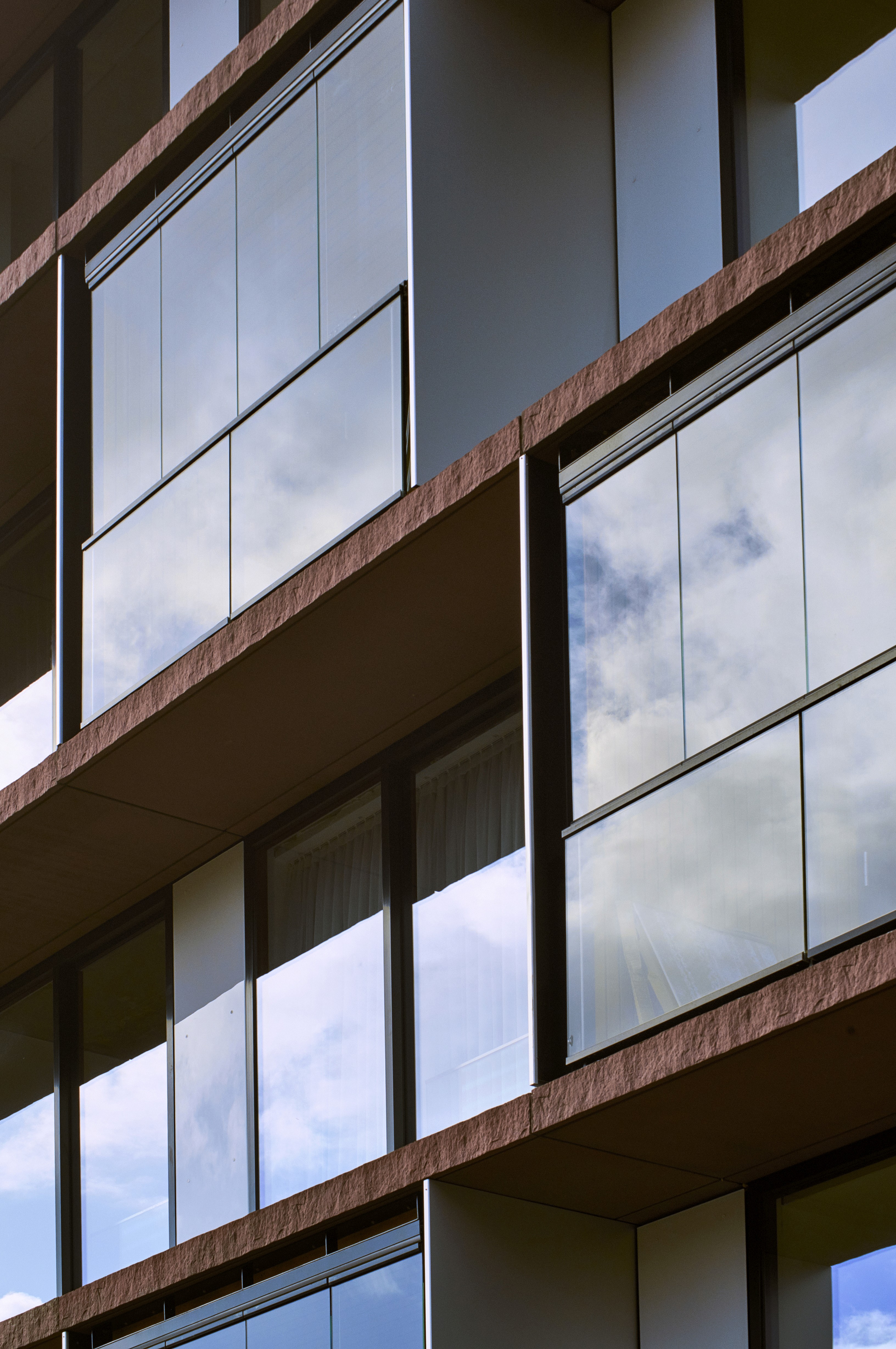
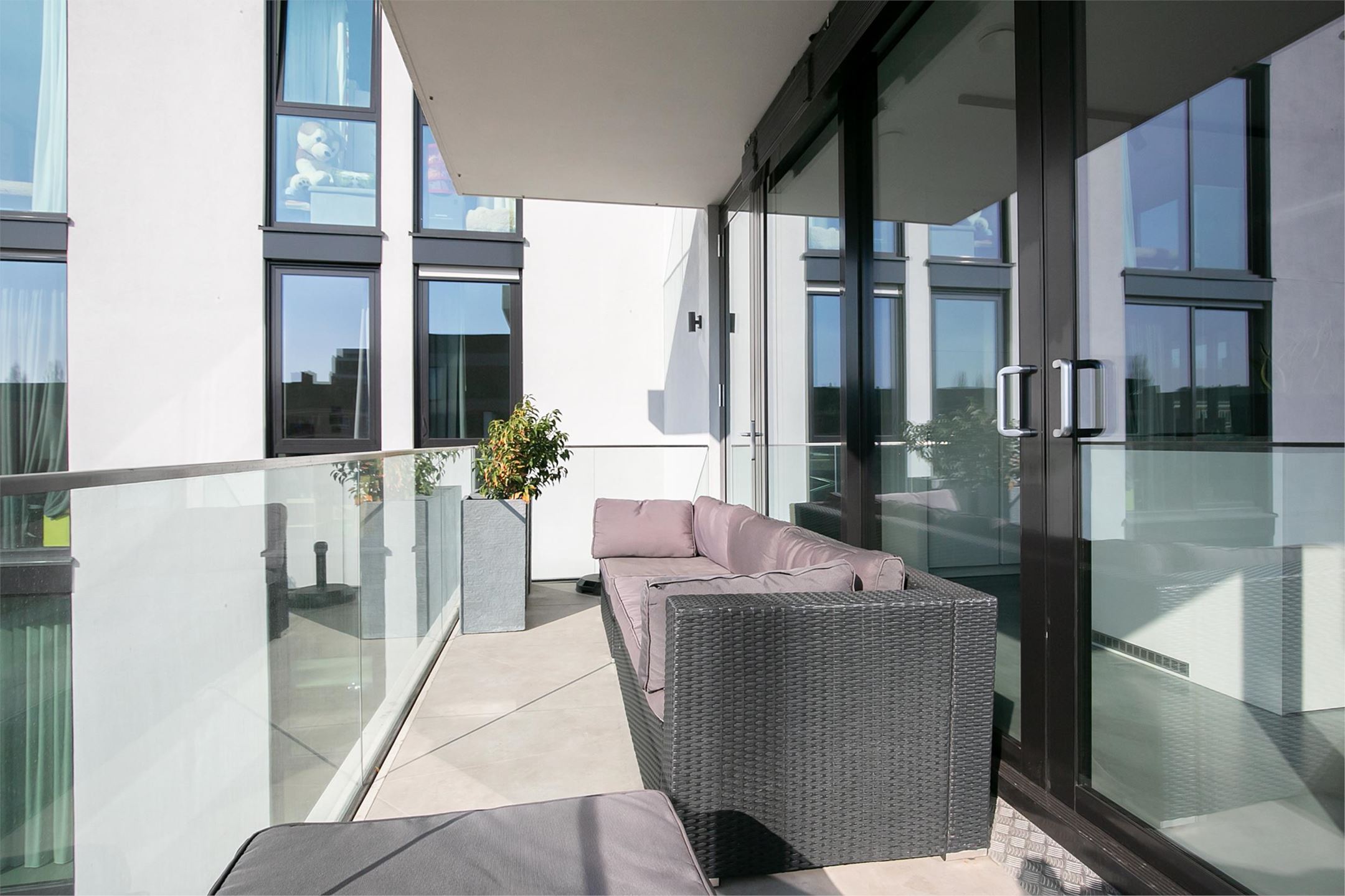
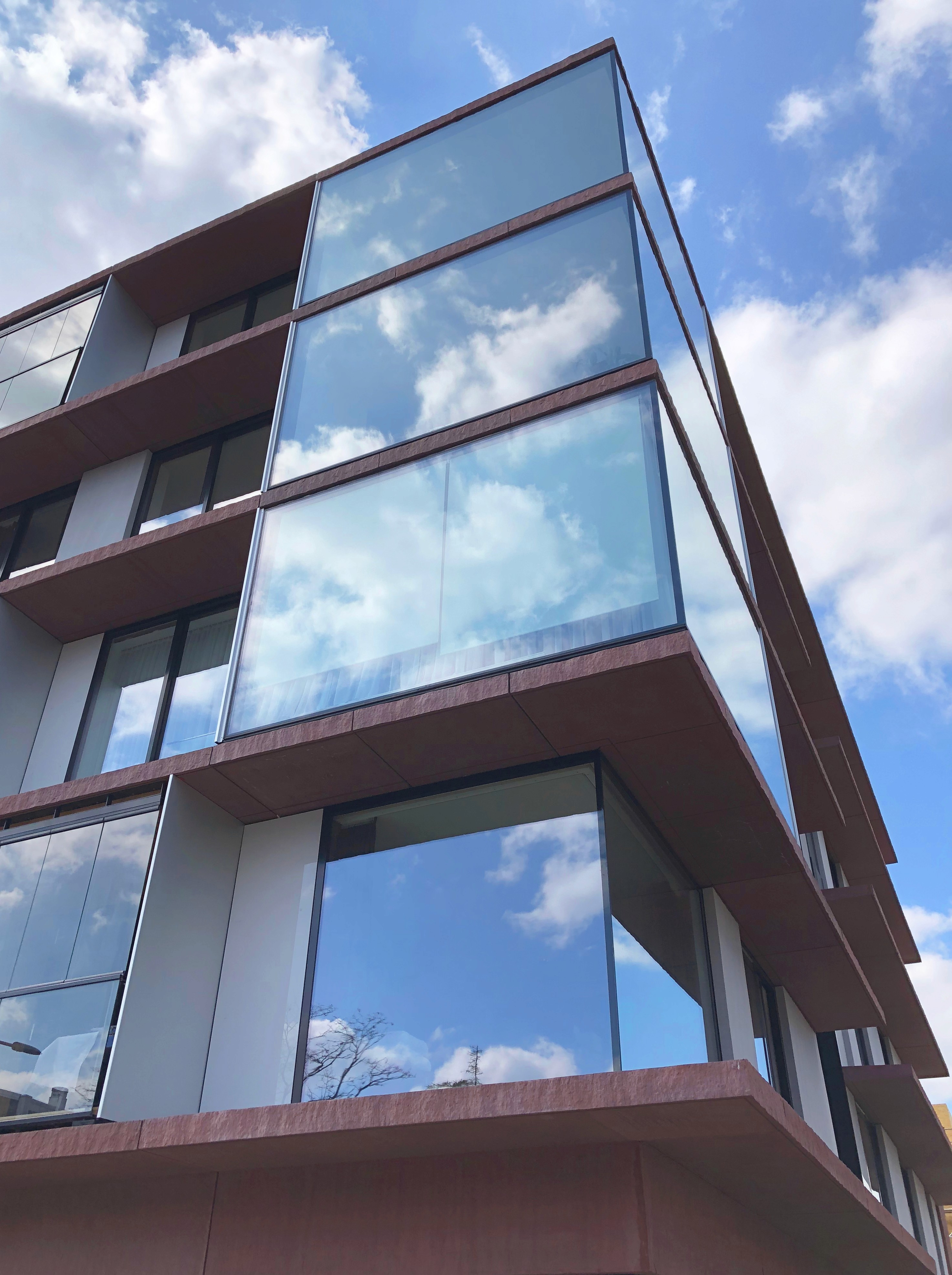
The brief was to design a building with a stone-like facade. Stone? We think the municipality was referring to brick, but brick is most commonly found in the city center. Our site is located in the heart of the Van Eesteren Plan: fast, prefabricated, and concrete. So we created a stone-like facade out of concrete. We added black and red sand to the concrete, giving it an iron-like color. The building stands like a monolith: a red rock in its surroundings. The south- and west-facing apartments all have spacious loggias. Only the five apartments in the northeast corner couldn't be given a large outdoor space. While they do get morning sun, they face a busy road. These apartments, initially considered the least quality-conscious, were given the highest quality. On the east side, they received winter gardens with sliding doors that can be completely retracted. In the corners, we created a 4.5 by 4.5-meter bay window: an explosion of space, with an open corner of two glued glass panes, and therefore without a jamb or pillar. One of the residents is installing a grand piano there. The winter garden and the bay window are the only spaces in the facade that fully fill the extra meter in the overhang. The ground-floor apartment didn't have a bay window, but it did have a sidewalk under the overhang: perfect for placing a table, bench, or plants.
The design responds to its postwar surroundings. The brief requested a stone-like façade, though brick is more typical in Amsterdam’s city center. Situated in the Van Eesteren Plan—a postwar neighborhood of fast, prefabricated housing—the building references this historical context through contemporary means.
Bordeaux-colored, textured concrete panels emulate a stone-like appearance, enhanced with black and red sand to give an iron-like tone. Strong horizontal bands reference modernist architecture, creating a subtle dialogue with the past while embracing modern construction techniques.
The design responds to its postwar surroundings. The brief requested a stone-like façade, though brick is more typical in Amsterdam’s city center. Situated in the Van Eesteren Plan—a postwar neighborhood of fast, prefabricated housing—the building references this historical context through contemporary means.
Bordeaux-colored, textured concrete panels emulate a stone-like appearance, enhanced with black and red sand to give an iron-like tone. Strong horizontal bands reference modernist architecture, creating a subtle dialogue with the past while embracing modern construction techniques.
Panoramic Corner
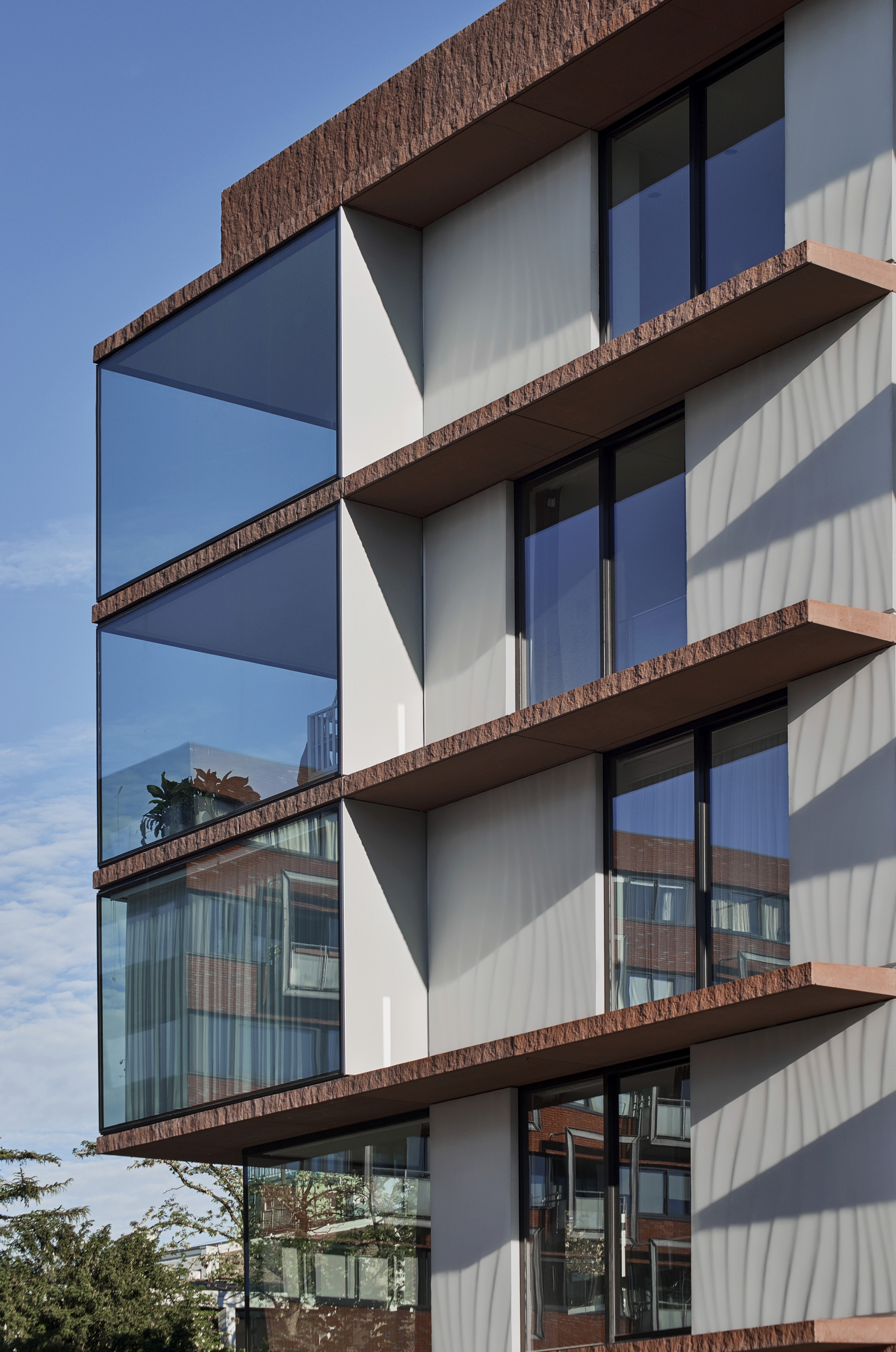
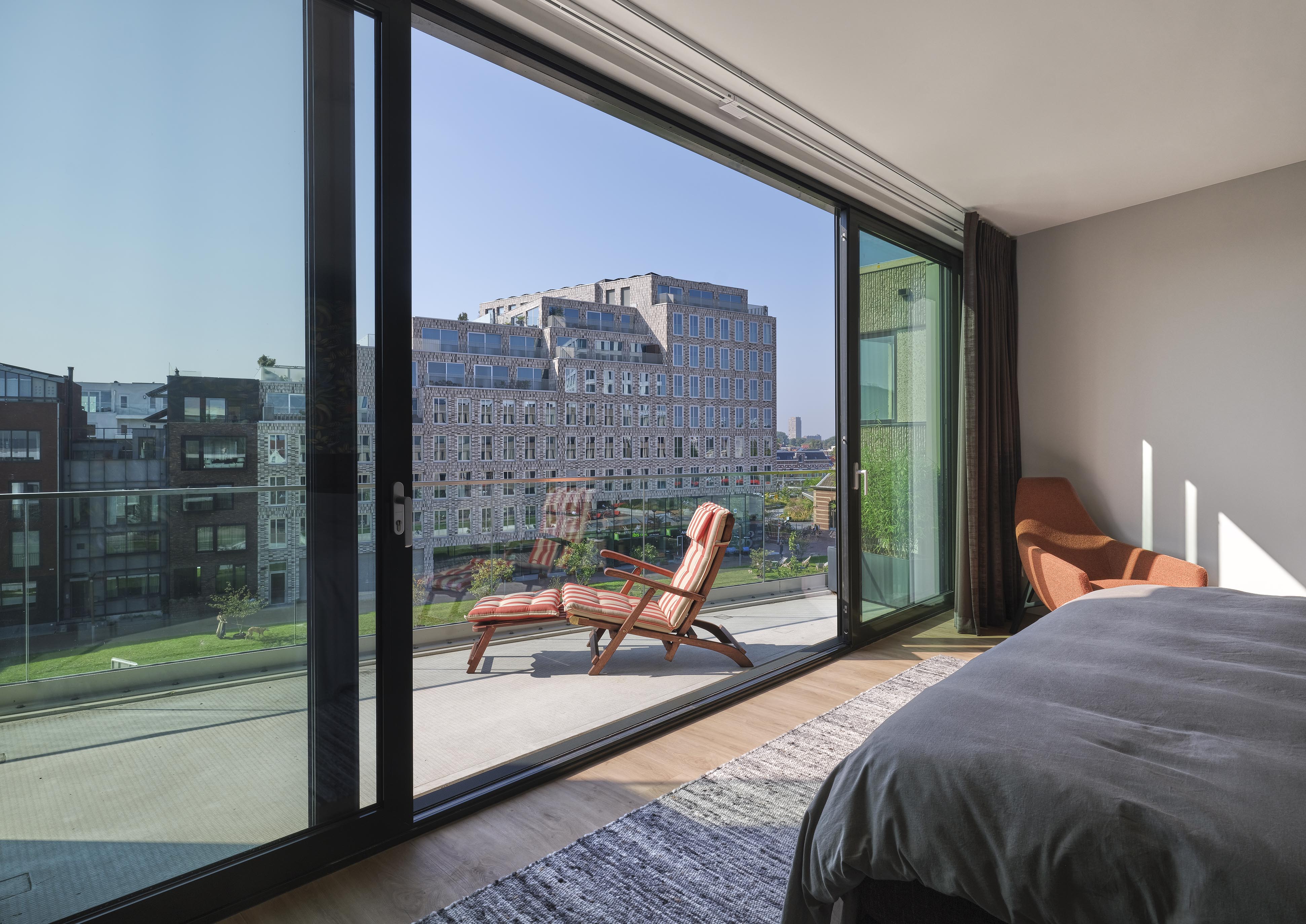
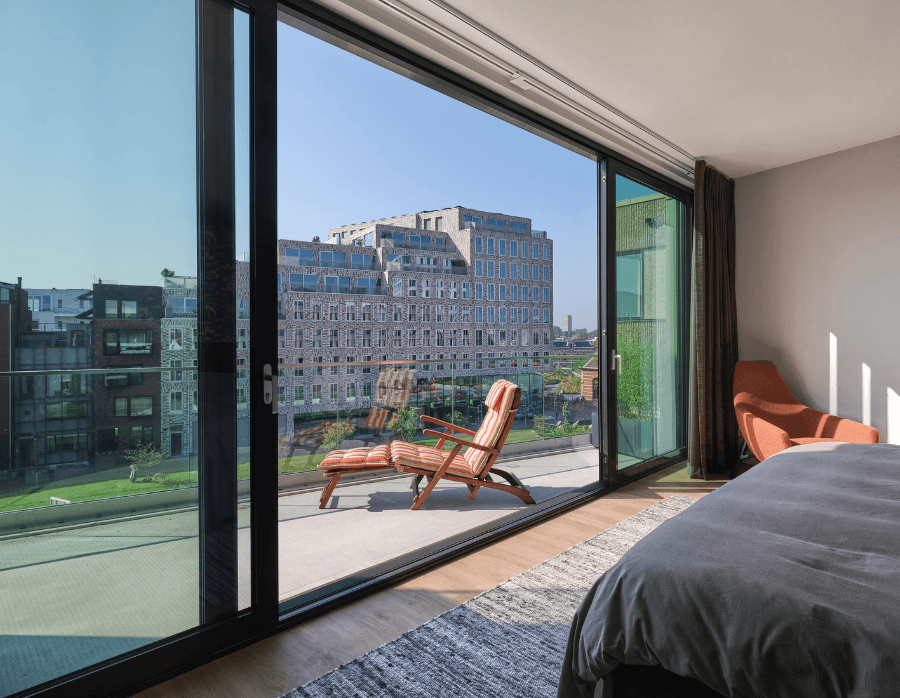
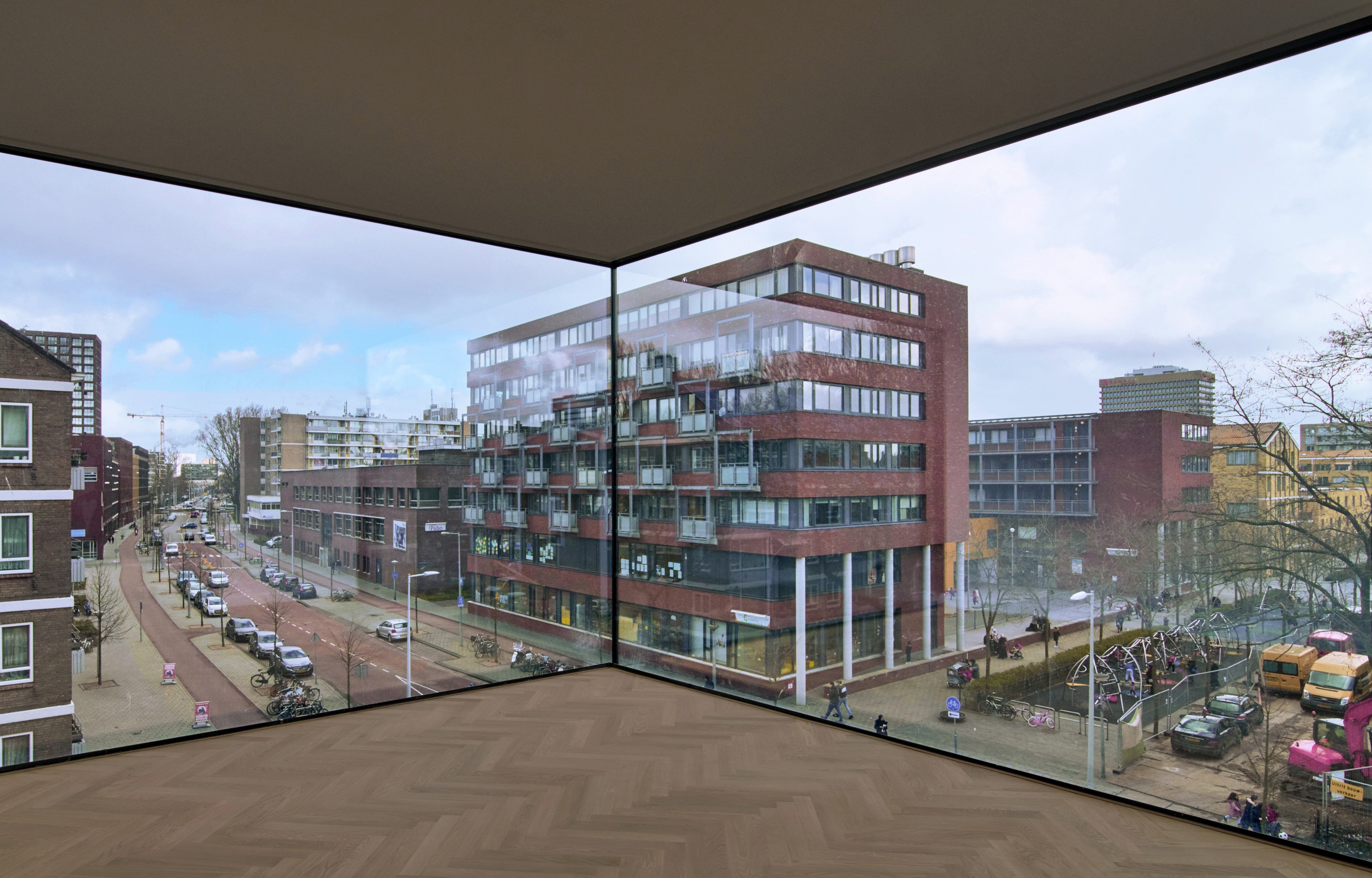
The cantilevered corner opens up toward the city. A standout feature of Go West is the large glass bow windows in the northeastern corner. Measuring 4.5 by 3 meters, these striking elements provide panoramic views and an abundance of natural light.
The column-free interiors, made possible through prestressed floors, offer residents an immersive spatial experience, transforming their living rooms into vibrant urban salons.
The cantilevered corner opens up toward the city. A standout feature of Go West is the large glass bow windows in the northeastern corner. Measuring 4.5 by 3 meters, these striking elements provide panoramic views and an abundance of natural light.
The column-free interiors, made possible through prestressed floors, offer residents an immersive spatial experience, transforming their living rooms into vibrant urban salons.
Dynamic Façades
Go West’s façades feature a rhythmic composition of patterned panels, brushed aluminum, and enameled glass. Wavy textures catch and reflect sunlight, shifting in appearance throughout the day. Combined with winter gardens and bow windows, these elements create a lively and dynamic façade.
Community and Social Life
Community & Social Life
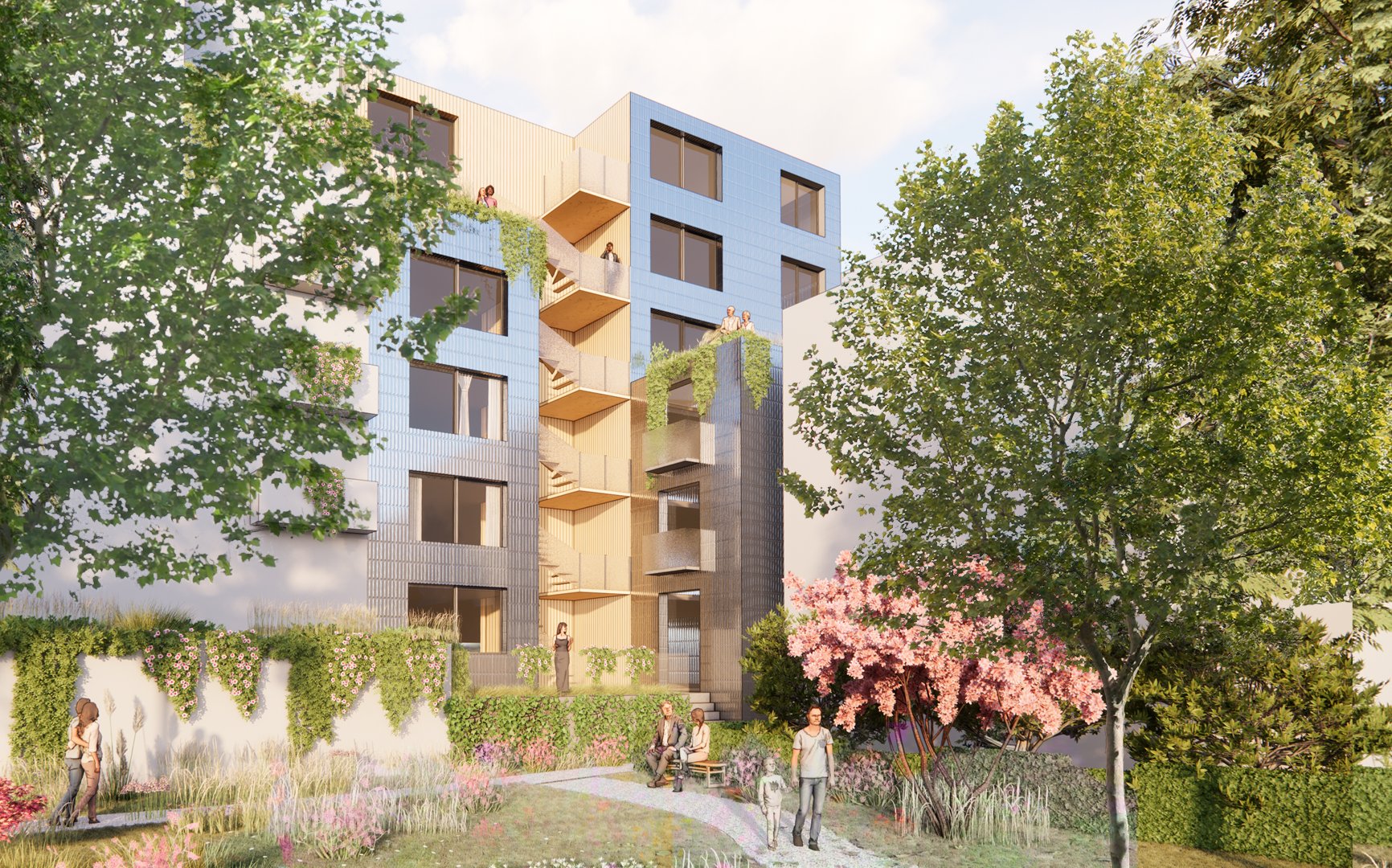
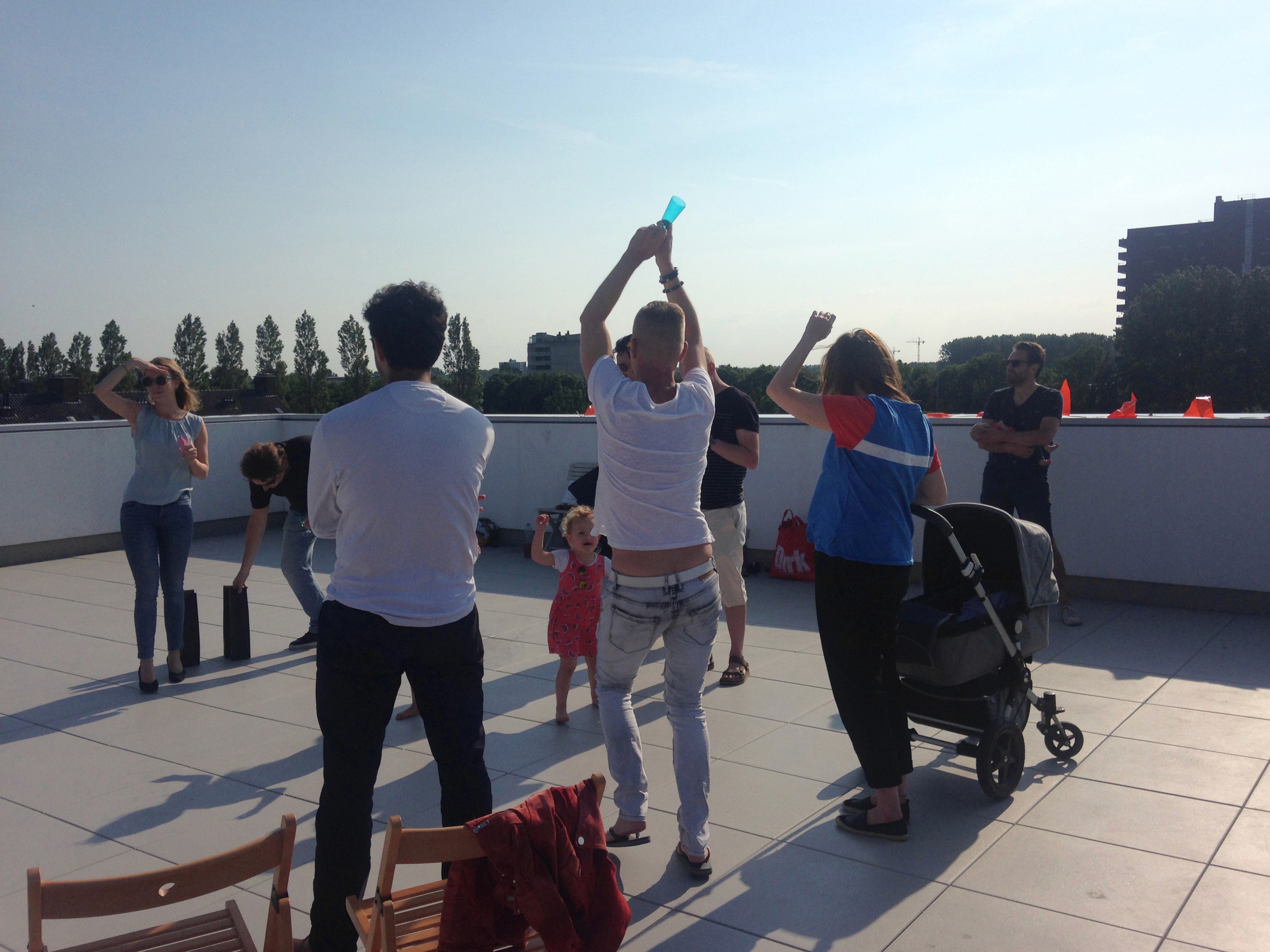
The building fosters interaction and a sense of belonging. Hallways are bright, tall, and generous, where residents hang art, place plants and shelves, and children play. The communal rooftop terrace, partially reserved for solar panels, also offers 140 m² of shared space for gardening, barbecues, and events, nurturing a strong sense of community.
Energy Neutrality
Energy Neutrality
Go West is designed to be energy-neutral. Highly insulated (Rc = 6) and connected to the district heating network, it achieves an EPC of just 0.15. Solar panels, underfloor heating, and mechanical ventilation optimize energy efficiency, while residents use energy-conscious appliances, such as hot-fill systems, to further reduce consumption.
Go West is designed to be energy-neutral. Highly insulated (Rc = 6) and connected to the district heating network, it achieves an EPC of just 0.15. Solar panels, underfloor heating, and mechanical ventilation optimize energy efficiency, while residents use energy-conscious appliances, such as hot-fill systems, to further reduce consumption.
Go West is designed to be energy-neutral. Highly insulated (Rc = 6) and connected to the district heating network, it achieves an EPC of just 0.15. Solar panels, underfloor heating, and mechanical ventilation optimize energy efficiency, while residents use energy-conscious appliances, such as hot-fill systems, to further reduce consumption.
Go West is designed to be energy-neutral. Highly insulated (Rc = 6) and connected to the district heating network, it achieves an EPC of just 0.15. Solar panels, underfloor heating, and mechanical ventilation optimize energy efficiency, while residents use energy-conscious appliances, such as hot-fill systems, to further reduce consumption.